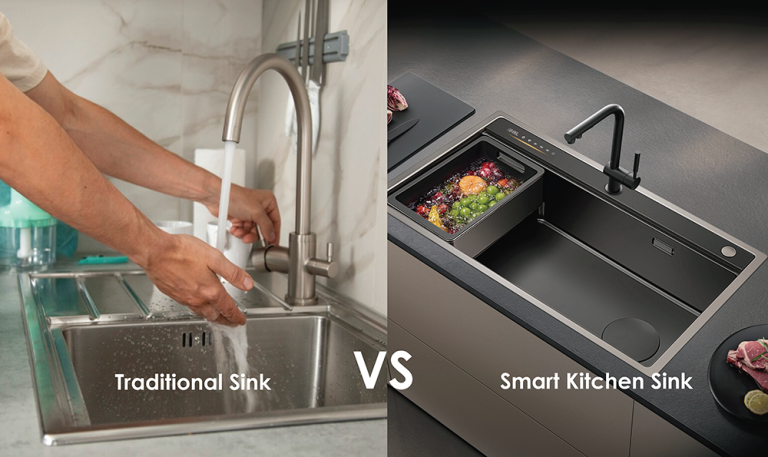
The kitchen sink has always been one of the hardest-working areas in every home. From washing vegetables and seafood to cleaning greasy cookware and preparing meals, it plays a central role in daily cooking.
But in 2026, homeowners are asking a different question:
Should I stick with a traditional kitchen sink, or is it time to upgrade to a smart sink?
With smart home technology becoming increasingly common in Malaysian homes, smart kitchen sinks are no longer considered a luxury. They’re becoming a practical investment for families who value convenience, hygiene, and efficiency.
If you’re renovating your kitchen or building a new home, this guide will help you understand the key differences between traditional sinks and smart sinks so you can make the right decision.
What Is a Traditional Kitchen Sink?
A traditional sink is the standard basin found in most homes. It typically includes:
- A stainless steel or granite sink bowl
- A manual faucet
- Basic drainage system
- Optional accessories like a drying rack or cutting board
While it gets the job done, most cleaning still relies entirely on manual effort.
For many households, this setup has remained unchanged for decades.
What Is a Smart Kitchen Sink?
A smart sink combines multiple kitchen functions into one integrated workstation.
Instead of being just a place to wash dishes, it becomes a multifunctional preparation and cleaning station.
Modern smart sinks can include features such as:
- Intelligent digital controls
- Multiple cleaning modes
- Fruits and vegetable cleaning functions
- Meat or seafood cleaning functions
- Automatic soaking and draining
- Keeping seafood fresh
- Accessories for food preparation
- Large-capacity workstation design
The goal is simple:
Reduce manual work while improving hygiene and making everyday kitchen tasks easier.
Smart Sink vs Traditional Sink
1. Cleaning Efficiency
A traditional sink relies entirely on manual washing, which may not always be enough to remove hidden dirt and bacteria from fresh ingredients.
A smart sink offers specialised cleaning functions, such as fruit and vegetable purification as well as seafood and meat cleaning, to effectively remove pesticide residues, bacteria, purines, and hormone residues.
2. Space Optimisation
Traditional sinks require separate tools for many kitchen tasks such as sink, drain basket, fruits / vegetable purifier and etc.
Although packed with features, smart sinks are designed to maximise workspace by integrating accessories within the sink itself. This makes them especially useful for compact kitchens.
3. Save Time in Daily Cooking
A traditional sink often requires multiple steps when preparing ingredients—washing, soaking, rinsing, and cleaning up afterwards.
A smart sink streamlines these tasks with integrated cleaning functions, allowing you to wash fruits, vegetables, seafood, and other ingredients more efficiently. By reducing manual effort and simplifying preparation, it helps save valuable time during everyday cooking.
Instead of spending extra time on repetitive washing processes, you can focus more on preparing delicious meals for your family.
4. Hygiene & Cleanliness
Manual washing in traditional sink often requires direct contact with food residue, grease, and dirt. Handling raw ingredients can leave your hands feeling greasy and require additional cleaning afterwards.
A smart sink helps minimise direct contact with messy ingredients, keeping your hands cleaner while improving the overall kitchen experience.
Is a Smart Sink Worth It in 2026?
For many Malaysian homeowners, the answer is increasingly yes.
Kitchen expectations have evolved. People are looking for appliances that save time, improve hygiene and simplify everyday routines.
A smart sink isn’t just another gadget—it’s a practical upgrade that combines multiple kitchen tasks into one streamlined workstation.